🌇 Quick Overview of Chiang Kai-shek Memorial Hall
Standing proudly in central Taipei, the Chiang Kai-shek Memorial Hall is one of Taiwan’s most beloved landmarks. The dazzling white façade, blue-tiled roof, and wide marble steps lead into a space filled with calm, history, and national pride. As you walk across Liberty Square, you’ll feel the vastness of the open air while hearing the flutter of the flag above. Inside, you’ll find solemn ceremonies and stories that reflect Taiwan’s path toward democracy.
💡 Pro Tip: You should visit early in the morning or late afternoon to enjoy cooler weather and softer light for photos.
🏛️ A Quick History
Chiang Kai-shek led the Republic of China from 1928 to 1975. After the Kuomintang (KMT) lost the Chinese Civil War in 1949, he and about two million followers fled to Taiwan, where they established four decades of martial law known as the “White Terror.” Following his death, the KMT government built this memorial complex modeled after the Sun Yat-sen Mausoleum in Nanjing. Over time, Liberty Square became the rallying ground for Taiwan’s pro-democracy movements, leading to the island’s first democratic election in 1996. In 2007, the hall was renamed National Taiwan Democracy Memorial Hall before reverting to its current title a year later.
💡 Pro Tip: You should come at sunset when the white marble glows gold and the lights begin to illuminate the square.
📅 Best Time to Visit Chiang Kai-shek Memorial Hall
Spring (March–May) and autumn (September–November) are the best seasons to explore the hall, with pleasant temperatures and clear skies. Summer can be humid, and typhoons may appear; winter stays mild but often drizzly. Morning hours are calmest, perfect for photos or quiet reflection. Avoid national holidays like Lunar New Year or 228 Memorial Day when Liberty Square overflows with visitors.
💡 Pro Tip: You should check weather forecasts and public holidays before planning your visit to avoid crowds and sudden rain.
🚇 How to Get to Chiang Kai-shek Memorial Hall
Reaching the hall is simple and efficient. Take the Taipei MRT to Chiang Kai-shek Memorial Hall Station, served by both the Red (Tamsui–Xinyi) and Green (Songshan–Xindian) lines. The ride from Taipei Main Station takes about 10 minutes. Travelers from Songshan Airport can transfer at Daan Station. Taxis and rideshares are convenient for groups or heavy luggage, and pedestrian paths around Liberty Square make walking pleasant.
💡 Pro Tip: You should take the MRT instead of a taxi during rush hours since traffic in central Taipei can be heavy.
⏰ Opening Hours & Best Times to Arrive
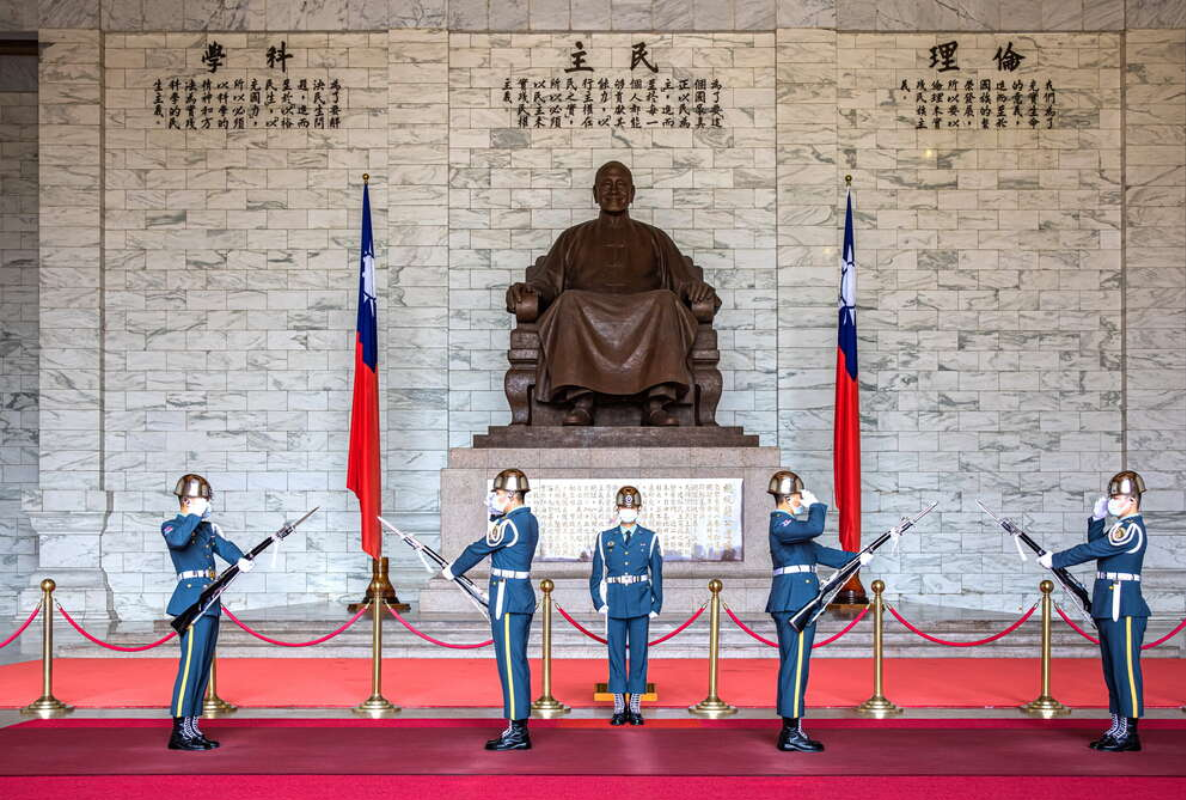
The main hall opens daily 9 AM – 6 PM, while the surrounding Liberty Square welcomes visitors from 5 AM to midnight. The honor guard ceremony happens hourly from 9 AM to 5 PM and lasts about 10 minutes, you should arrive 15 minutes early to grab the best viewing spot.
| Area | Opening Hours | Notes |
|---|---|---|
| Memorial Hall | 9:00 AM – 6:00 PM | Closed on holidays or maintenance days |
| Liberty Square | 5:00 AM – 12:00 AM | Ideal for morning jogs & night photos |
💡 Pro Tip: You should arrive before 9 AM if you want to watch the first guard-changing ceremony with fewer people around.
🎢 Top Things to Do Inside Chiang Kai-shek Memorial Hall
Liberty Square Arch
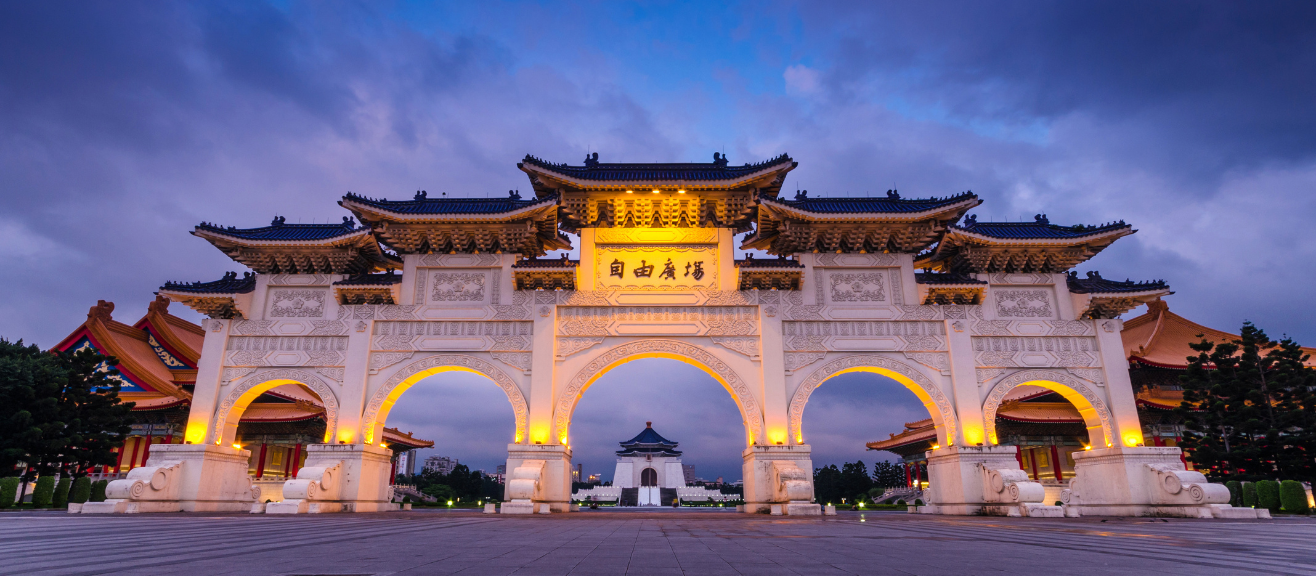
Serving as the grand entrance to the complex, Liberty Square Arch is a magnificent five-arched gate that mirrors the memorial’s iconic colors — a pure white marble base crowned with blue glazed tiles. The large Chinese characters 自由廣場 (Liberty Square) are written left to right, a modern touch contrasting the traditional right-to-left orientation used before its renaming. Standing beneath the arch, you’ll feel a sense of openness as you gaze across the square toward the memorial hall, framed perfectly in the distance.
💡 Pro Tip: You should take photos at sunrise or sunset to capture the arch glowing softly under the changing sky.
National Theater & National Concert Hall
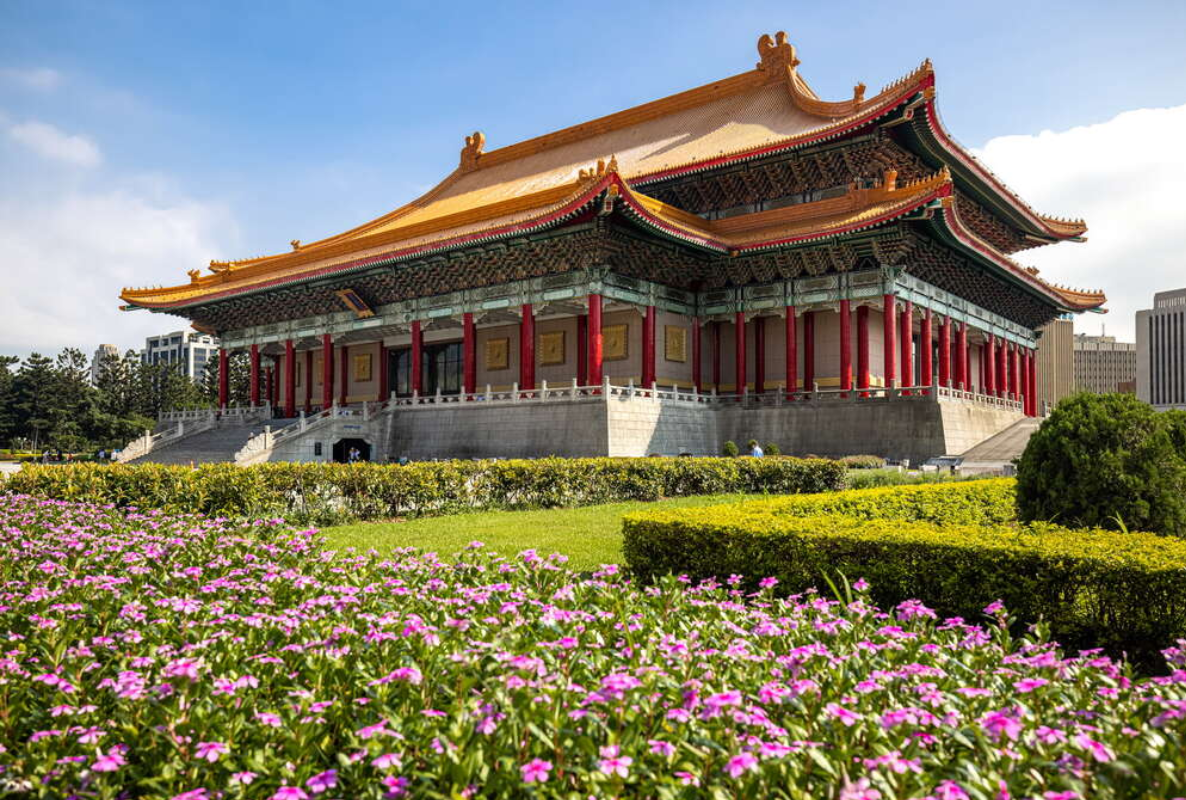
On either side of Liberty Square stand two of Taipei’s most photogenic landmarks — the National Theater and National Concert Hall. Their sweeping orange roofs, red pillars, and intricate carvings reflect classical Chinese architecture and make perfect backdrops for photos. The Theater, on the south side near the MRT exit, hosts plays, ballets, and cultural shows, while the Concert Hall to the north welcomes world-class orchestras and recitals. Even from outside, the symmetry and grandeur of these buildings embody Taiwan’s artistic soul.
💡 Pro Tip: You should visit mid-morning for the best natural light and stop by the lobby café for a short break between sightseeing.
Liberty Square & Democracy Boulevard
At the heart of the complex lies Liberty Square — Taiwan’s largest public plaza and a symbol of freedom. Spanning around 240,000 m² (including gardens and buildings), it’s where national events and celebrations unfold. The central paved section between the Theater and Concert Hall, measuring about 14,400 m², forms Democracy Boulevard, a grand walkway leading straight to the memorial hall. The openness here, framed by architecture and sky, captures the nation’s spirit of unity and progress.
💡 Pro Tip: You should visit around golden hour when the sunlight reflects off the marble and gives perfect warm tones for photography.
Ponds and Parks
Encircling the main plaza, tranquil gardens and ponds bring balance to the site’s solemn grandeur. Locals gather here each morning for tai chi or dancing, while families feed koi fish in the ponds. The pathways are lined with indigenous flora — plums, cherry blossoms, banyans — offering shade and serenity. The combination of culture and greenery makes Liberty Square more park than plaza, giving you space to breathe in the heart of the city.
💡 Pro Tip: You should take a slow morning walk around the ponds to see locals exercising and enjoy the park’s peaceful atmosphere.
Chiang Kai-shek Memorial Hall
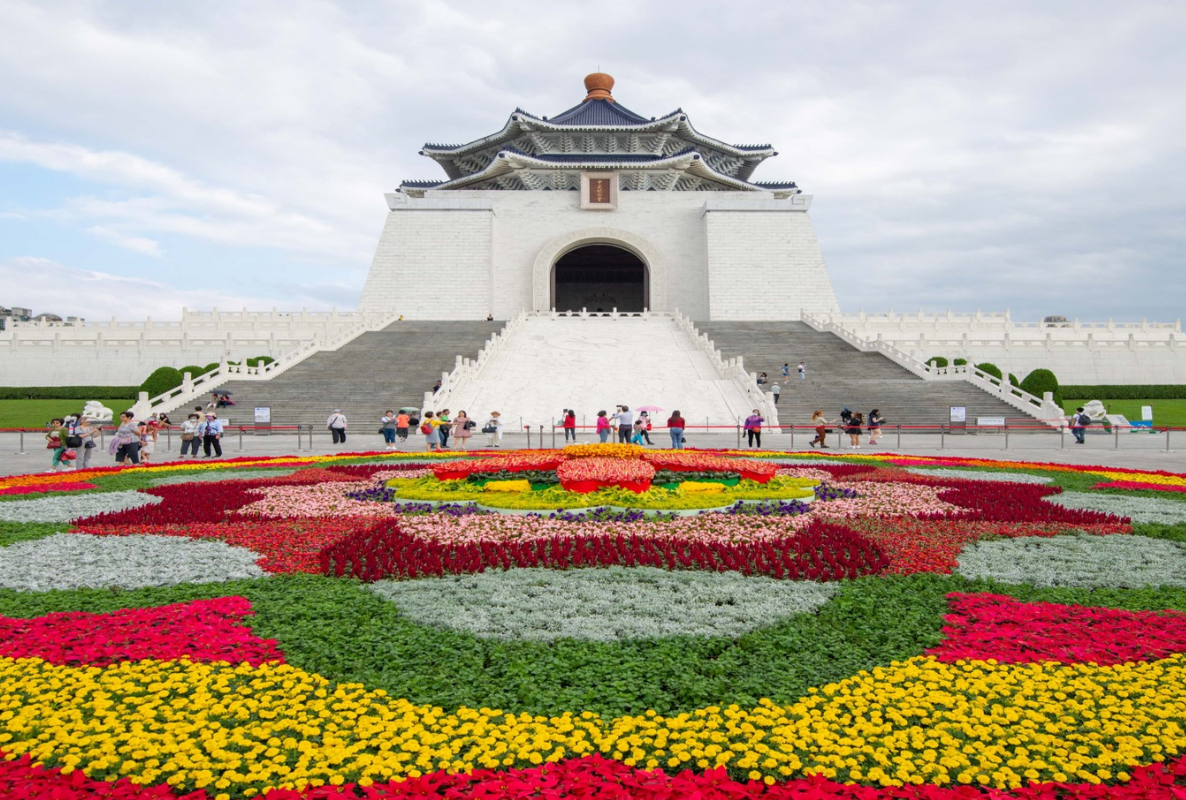
Finally, at the far end of Democracy Boulevard stands the hall itself — the centerpiece of the entire complex. Designed by architect Yang Cho-cheng, its style was inspired by Nanjing’s Sun Yat-sen Mausoleum. The grand white structure rises 70 meters, topped with an eight-sided blue-tiled roof symbolizing infinity and crowned in gold. Inside, a bronze statue of Chiang Kai-shek presides solemnly over the space, guarded by sentinels and surrounded by carved motifs reflecting dignity and remembrance. Beneath lies an exhibition gallery showcasing Taiwan’s historical transformation.
💡 Pro Tip: You should climb the 89 steps early in the morning for clear city views and stay for the hourly guard ceremony.
🍽️ Food & Drink Options
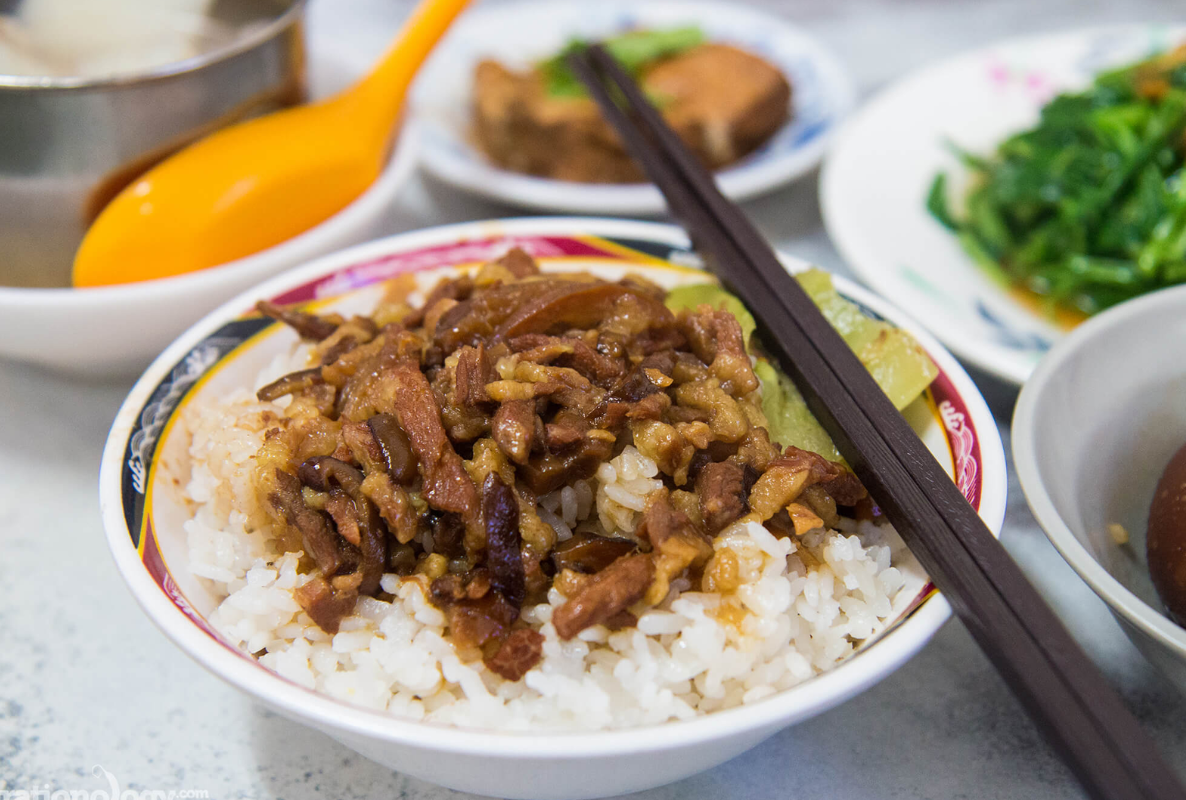
Need a break? Stop by Buy & Bite Café near Yun Han Pond for coffee, sandwiches, and pastries with park views. For authentic Taiwanese flavor, try Jing Feng Lu Rou Fan, famous for its braised pork rice only 5 minutes away. Prices are moderate, and outdoor tables let you relax under trees after sightseeing. On weekends, you might find food stalls and performers near the arch.
💡 Pro Tip: You should plan your meal before noon, as most cafés and restaurants nearby get busy during lunchtime.
🏙️ Nearby Attractions
Make the most of your Taipei day trip by visiting nearby highlights:
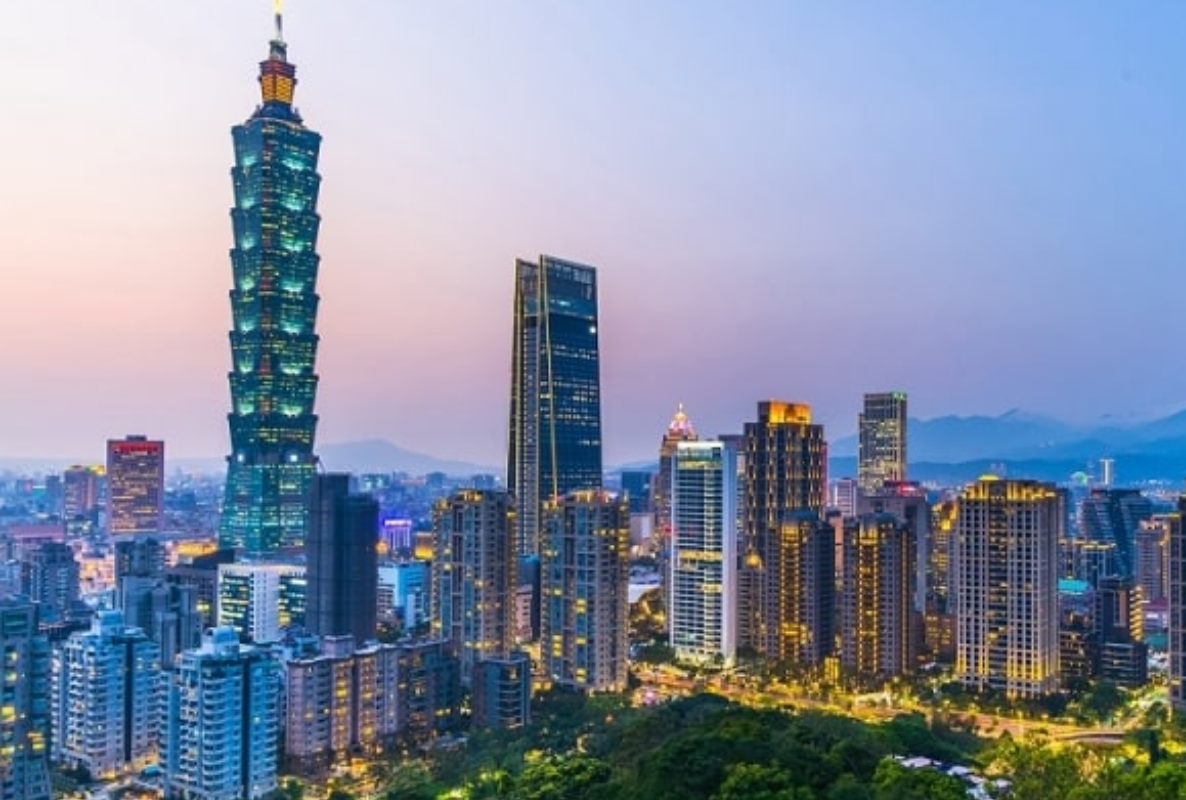
- Taipei 101 – Once the world’s tallest building (508 m), it offers a spectacular observatory and shopping mall.
- National Palace Museum – Houses 700,000 ancient Chinese artworks, from jade to calligraphy.
- Shilin Night Market – Taipei’s most famous street-food spot with fried chicken, oyster omelets & bubble tea.
💡 Pro Tip: You should visit Shilin Night Market after sunset for the best street-food experience and lively atmosphere.
🌟 Ready to explore more of Taipei’s must-see spots? Discover exclusive travel guides, detailed itineraries, and ticket deals via laimi.com to make your trip smoother and more memorable.
🎟️ Ticket Tips & Visitor Info
Admission to the Chiang Kai-shek Memorial Hall is free! You can walk around Liberty Square, gardens, and exhibits without tickets. Only temporary exhibitions may require paid entry, which you can reserve online. The entry process is simple — no ID needed for general access.
💡 Pro Tip: You should arrive 15 minutes early to get a good spot for the guard ceremony and check the official website for event updates.
👨👩👧 Who Is It Best For?
This memorial appeals to travelers of every kind. History enthusiasts will admire its rich context, photographers will capture stunning geometry, and families can stroll safely through open courtyards. Couples can enjoy quiet walks by the ponds, while seniors appreciate the calm environment. English signage and ramps make it friendly for foreign visitors and those with mobility needs.
💡 Pro Tip: You should visit on weekdays if possible to avoid the large weekend crowds and school groups.
🎒 What to Pack & Know Before You Go
You should wear comfortable walking shoes because the square and stairs are wide and open. Moreover, it's quite hard sunny, sunscreen, a hat, and a water bottle are suitablr to stay cool under Taipei’s midday sun.
Don't forget to carry a small umbrella or raincoat since the weather can change quickly. You should also pack a portable charger for your phone or camera, you’ll take more photos than you expect! If you visit during summer, lightweight clothing will help you stay comfortable.
💡 Pro Tip: You should travel light and keep your belongings minimal so that you can move easily across the large open grounds.
🏁 Conclusion
A visit to the Chiang Kai-shek Memorial Hall is both a journey through Taiwan’s past and a celebration of its freedom today. From the majestic marble stairs to the echoing guard drills, every detail feels deeply symbolic. Despite occasional crowds or heat, the sense of pride and tranquility makes it worth your time.
✨ Want to explore more cultural landmarks like Chiang Kai-shek Memorial Hall? Find complete travel guides, best visiting times, and nearby attractions — all in one place.
🌏 Start your cultural journey today at laimi.com and make the most of your Taiwan adventure!