🕍 Bai Dinh Pagoda: Discover Vietnam’s Grandest Buddhist Sanctuary
✨ A Glimpse into Vietnam's Grandest Spiritual Sanctuary
The moment you arrive at Bai Dinh Pagoda, the sheer scale of the place takes your breath away. It’s not just a temple; it’s an entire world of shimmering gold, intricate stonework, and spiritual tranquility nestled in the limestone karsts of Ninh Binh. The air hums with a quiet energy, punctuated by the distant chime of a massive bronze bell and the soft murmurs of pilgrims. This is Vietnam's largest pagoda complex, a stunning blend of ancient reverence and modern ambition. Its iconic status comes from holding multiple national records, from the largest bronze Buddha to the longest Arhat corridor. This guide will walk you through everything you need to plan your visit: when to go, how to get there, must-see highlights, and insider tips. Get ready to explore one of the most awe-inspiring things to do in Ninh Binh.
Ready to see it for yourself? Get your Bai Dinh Pagoda tickets on laimi.com.
🙏 History of Bai Dinh Pagoda
Bai Dinh Pagoda's legacy stretches back over a millennium, deeply rooted in the ancient capital of Hoa Lu - the heartland of the Dinh, Le, and Ly dynasties. These powerful Vietnamese rulers revered Buddhism as the state religion, establishing Ninh Binh as a spiritual center filled with sacred temples. The pagoda's name itself means "worshiping heaven and earth on the highest peak," reflecting its profound significance.
The site held royal importance even before the pagoda was built. It was on Dinh Mountain that King Dinh Tien Hoang established an altar to pray for national prosperity. Centuries later, King Quang Trung chose this same high ground to rally his troops before a legendary military victory.
The ancient pagoda was officially founded in 1136 by the revered Zen Master Nguyen Minh Khong. Legend says he discovered the mountain's tranquil caves while searching for medicinal herbs to cure the king's illness. Recognizing its sacred energy, he built a temple for worship and healing, establishing a legacy that blends spiritual devotion with royal history. This profound heritage led to its designation as a national historical and cultural relic in 1997.
📅 When is the Ideal Time to Visit Bai Dinh Pagoda?
The best time to visit Bai Dinh Pagoda is during the spring, from January to March. The weather is cool and pleasant, making it ideal for exploring the vast complex on foot. This period also coincides with the vibrant Bai Dinh Pagoda Festival after the Lunar New Year, offering a lively glimpse into local spiritual traditions. You'll find the landscape lush and the atmosphere electric with festive energy.
To enjoy a more peaceful visit, try to avoid major Vietnamese public holidays, as the complex can get very crowded. The summer months, from June to August, can be extremely hot and humid, which can make the long walks between temples challenging. For a complete overview of the region's climate, check out our full guide on the best time to visit Ninh Binh. To plan around peak travel dates, our Vietnam public holiday calendar can help you find the quietest times for your trip.
🚇 Navigating Your Way to Bai Dinh Pagoda
Bai Dinh Pagoda is conveniently located about 20 km west of Ninh Binh city, making it an accessible day trip. The journey from the city center typically takes around 30 to 45 minutes.
Here are the most common ways to get there:
Motorbike or Bicycle: Many travelers rent a motorbike in Ninh Binh for a flexible and scenic ride. The route winds through stunning countryside, past rice paddies and dramatic karst formations, turning the journey into an adventure itself.
From Hanoi The drive from Hanoi is about 95 km and takes approximately 2 hours. You can take a comfortable limousine bus, a public coach from Giap Bat Bus Station, or book a private car for maximum convenience.
Taxi or Rideshare: For families or those with luggage, a taxi or Grab is a straightforward option from anywhere in Ninh Binh.
Public Bus: Local buses run from Ninh Binh's main bus station to the pagoda, offering a budget-friendly choice that takes about an hour.
For real-time directions, it's always best to check Google Maps before you depart. For more tips on getting around the province, see our guide to transport in Ninh Binh.
⏰ Visitor Hours and Ideal Arrival Times
To fully appreciate the serenity and scale of Bai Dinh Pagoda, timing is everything. Arriving early helps you avoid the largest tour groups and the intense midday heat, allowing for a more reflective experience.
| Day | Opening Hours |
|---|---|
| Monday - Sunday | 6:00 AM – 9:00 PM |
Note: These hours can be subject to change during festivals or special events. It's always a good idea to check for the latest updates on the official website or the laimi.com ticket page before your visit.
To avoid the busiest times, aim to get there right at opening or in the late afternoon. Get your tickets for Bai Dinh Pagoda in advance to make your entry seamless.
🎢 A Tour of Bai Dinh's Most Spectacular Sights
Prepare to be mesmerized by the sheer scale and spiritual artistry of Bai Dinh Pagoda. The complex is a stunning showcase of record-breaking structures and serene sanctuaries. Here’s a guide to the absolute must-see highlights, divided into the ancient pagoda's historical charm and the new pagoda's modern grandeur.
The Ancient Bai Dinh Pagoda: A Journey Back in Time
Tucked away 800 meters from the main complex, the ancient pagoda offers a tranquil escape into history. Reaching it requires a climb up 300 stone steps, but the reward is a mystical world nestled within natural caves.
Bright Cave & Dark Cave: The journey up leads to a crossroads. To the right, the Bright Cave houses serene altars for Buddha and the mountain god, Cao Son. Sunlight filters in, creating a peaceful ambiance. To the left, the larger Dark Cave is a mysterious labyrinth of seven interconnected grottoes dedicated to the Mother Goddess and other deities, complete with shimmering stalactites and a sacred "Jade Well."
Temple of Saint Nguyen Minh Khong: At the entrance to the caves stands a temple honoring the pagoda's founder, Zen Master Nguyen Minh Khong. A revered healer and monk, he discovered these caves while searching for medicinal herbs and established this sanctuary.
Temple of the Mountain God: Beyond the Bright Cave lies the temple for Cao Son, a powerful deity believed to be a son of the mythical Lac Long Quan and a guardian of the Hoa Lu Citadel's western gate.
The New Bai Dinh Pagoda: A Showcase of Grandeur
The new complex is a breathtaking display of architectural ambition, holding several national and Asian records.
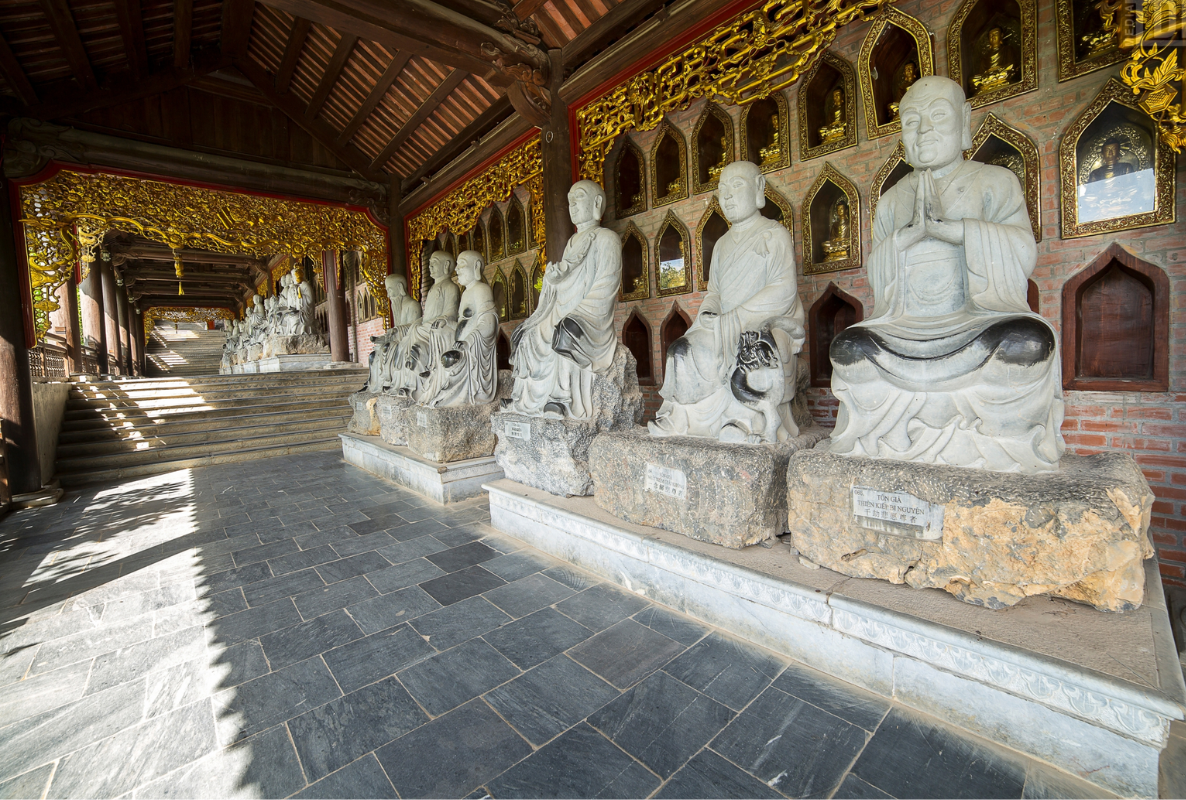
Arhat Corridor: This magnificent wooden corridor, the longest in Asia, stretches for nearly 3.4 km. It is lined with 500 stone statues of Arhats, each meticulously carved with a unique expression and posture, guiding you on a spiritual path through the complex.
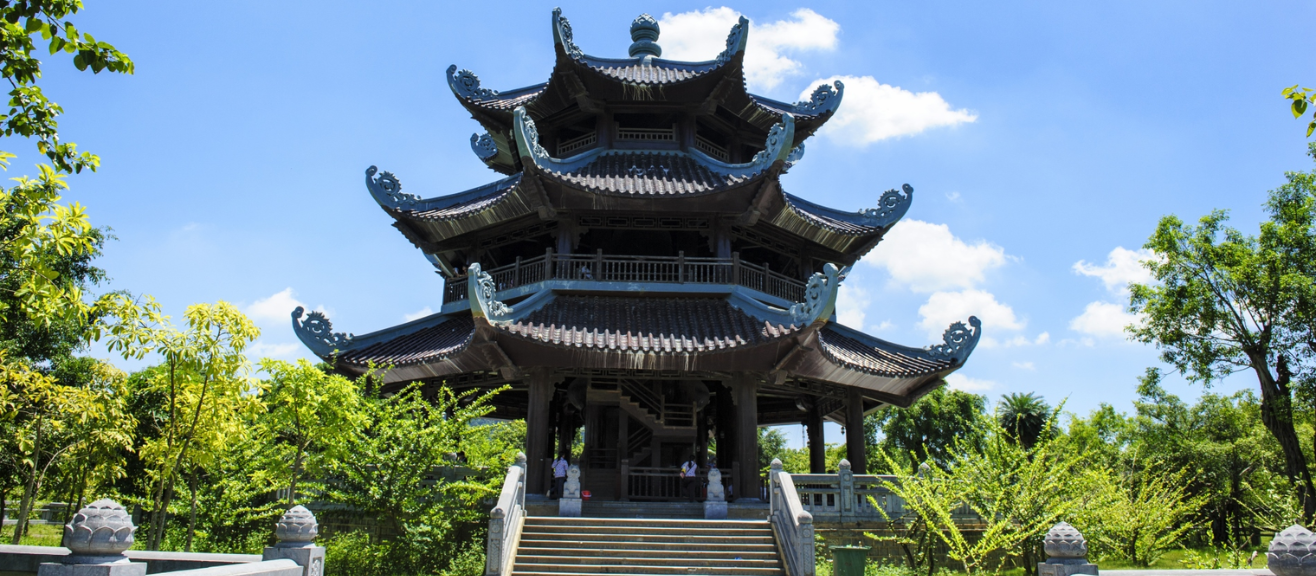
The Great Bell Tower: (Thap Chuong) This striking, three-tiered octagonal tower houses the largest bronze bell in Vietnam, weighing a colossal 36 tons. Its powerful resonance is believed to bring peace and blessings.
Hall of the Bodhisattva: (Phat Ba) This hall is home to the awe-inspiring thousand-armed, thousand-eyed Guan Yin statue. Gilded and cast in bronze, it stands nearly 10 meters tall and is Vietnam's largest statue of the Bodhisattva of Compassion.
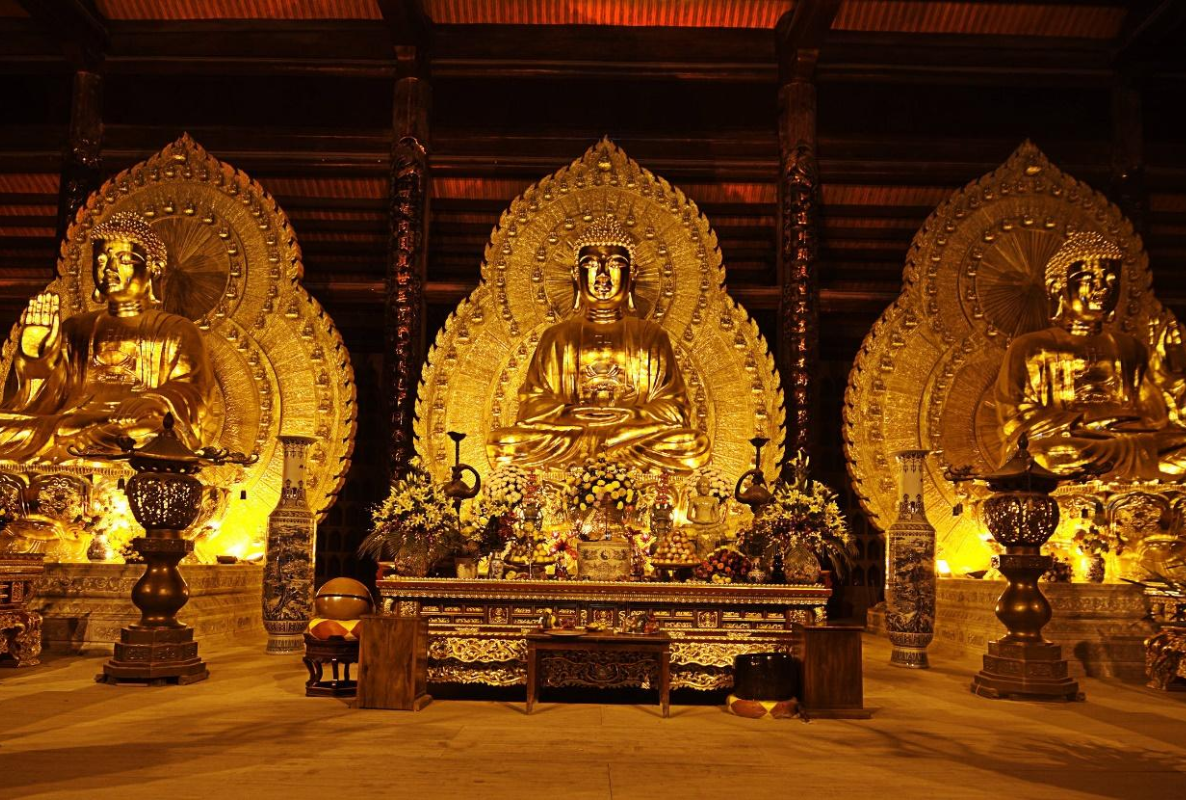
Hall of the Dharma Lord: (Dien Phap Chu) Inside this grand hall sits a monumental masterpiece: the 100-ton bronze statue of Buddha Shakyamuni, the largest in Vietnam. Seated on a lotus throne, it radiates an aura of profound peace.
Hall of Three Worlds: (Dien Tam The) At the highest point of the complex stands this magnificent hall, housing three colossal bronze statues representing the Buddhas of the past, present, and future. Each statue weighs 50 tons, making it the largest set of its kind in the country.
The Grand Stupa: (Bao Thap) Soaring 100 meters high, this 13-story stupa is an iconic landmark. Take the elevator to the top to witness breathtaking panoramic views and see the sacred Buddha relics brought from India that are enshrined within.

Maitreya Buddha Statue Perched on a hill overlooking the complex, the gigantic smiling statue of the Future Buddha radiates joy. Weighing 80 tons, its presence adds a feeling of happiness and hope to the landscape.
💡 Pro Tip: The complex is enormous. Save your energy by using the electric car service to travel between the main entrance, the different halls of the new pagoda, and the foot of the mountain leading to the ancient pagoda. It’s a small fee that makes a huge difference in your experience.

🎉 Celebrating Faith and Tradition: Festivals Near Bai Dinh Pagoda
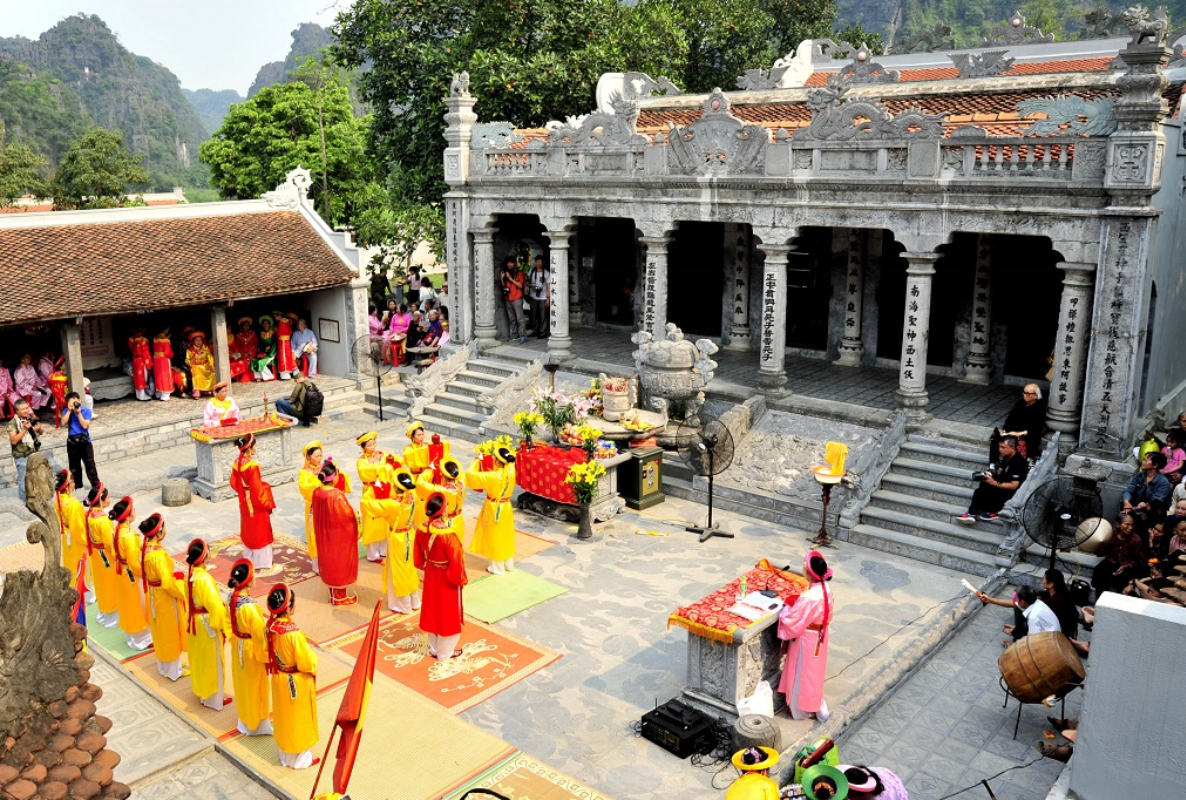
The region surrounding Bai Dinh Pagoda is a vibrant tapestry of culture and spirituality, brought to life through a series of captivating festivals held throughout the year. These events offer a profound look into Vietnam's rich history, blending sacred rituals with joyous community celebrations. Here is your guide to the most significant festivals in Ninh Binh.
The Bai Dinh Pagoda Festival
This is the largest festival in Ninh Binh, marking the start of the spring pilgrimage season. The event honors national heroes and deities with solemn rituals, a grand procession, and lively folk games and music.
- Time: Kicks off on the 6th day of the 1st lunar month and continues until the end of the 3rd lunar month.
The Trang An Festival
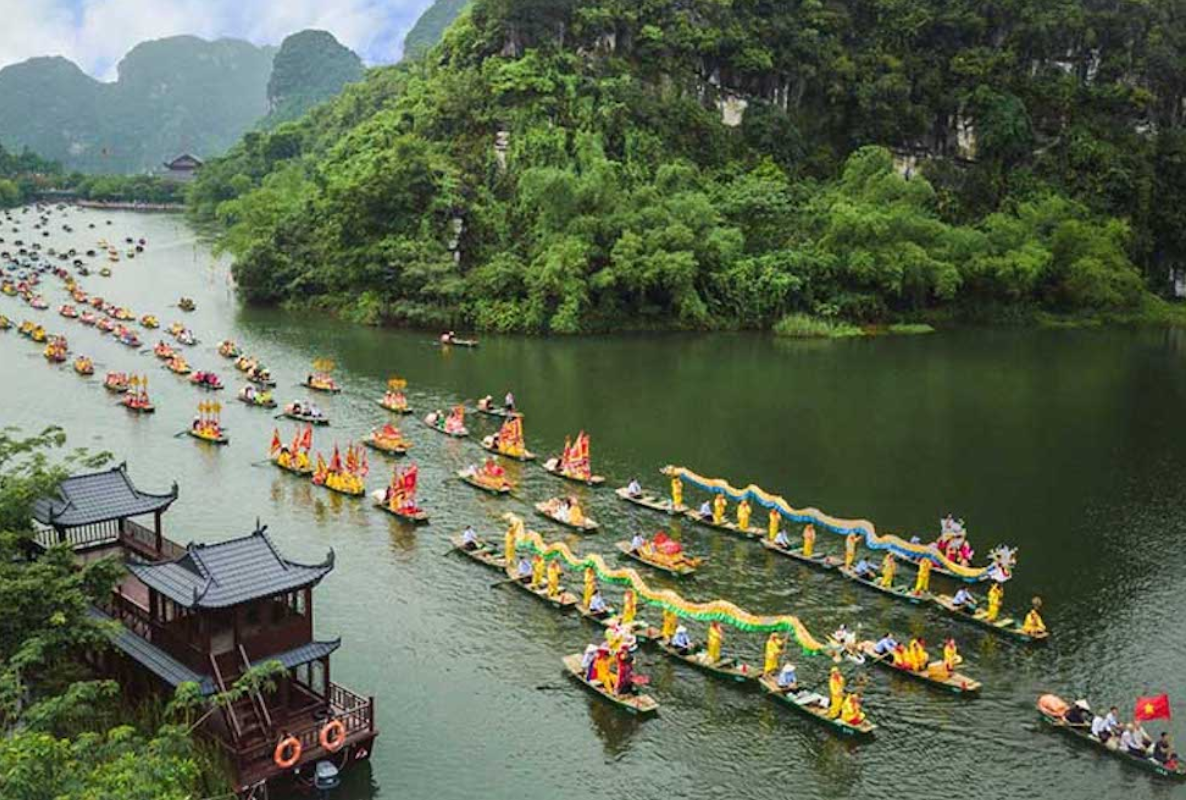
This festival honors Saint Quy Minh Dai Vuong with a spectacular dragon boat procession on the Sao Khe River. It is a beautiful tribute to the Vietnamese tradition of "remembering the source of the water we drink" within the stunning UNESCO World Heritage site.
- Time: Held annually on the 18th day of the 3rd lunar month.
The Hoa Lu Ancient Capital Festival
One of Vietnam's most important historical festivals, this event commemorates the emperors Dinh Tien Hoang and Le Dai Hanh. It features magnificent processions, a water-carrying ritual for prosperity, and a mesmerizing floating lantern ceremony.
- Time: Held annually from the 6th to the 8th day of the 3rd lunar month.

The Thai Vi Temple Festival
Held at the historic Thai Vi Temple in Tam Coc, this festival is dedicated to the revered kings of the Tran Dynasty. The event includes solemn worship rituals, a lively procession, and traditional folk games like human chess and wrestling.
- Time: Held from the 14th to the 17th day of the 3rd lunar month.
🍽️ A Taste of Ninh Binh Near Bai Dinh Pagoda
While the pagoda complex has food stalls for a quick snack, the true culinary adventure lies in the local specialties of Ninh Binh. Just a short drive from Bai Dinh, you’ll find restaurants serving dishes that are famous throughout Vietnam.
Here are some unmissable local foods to try:
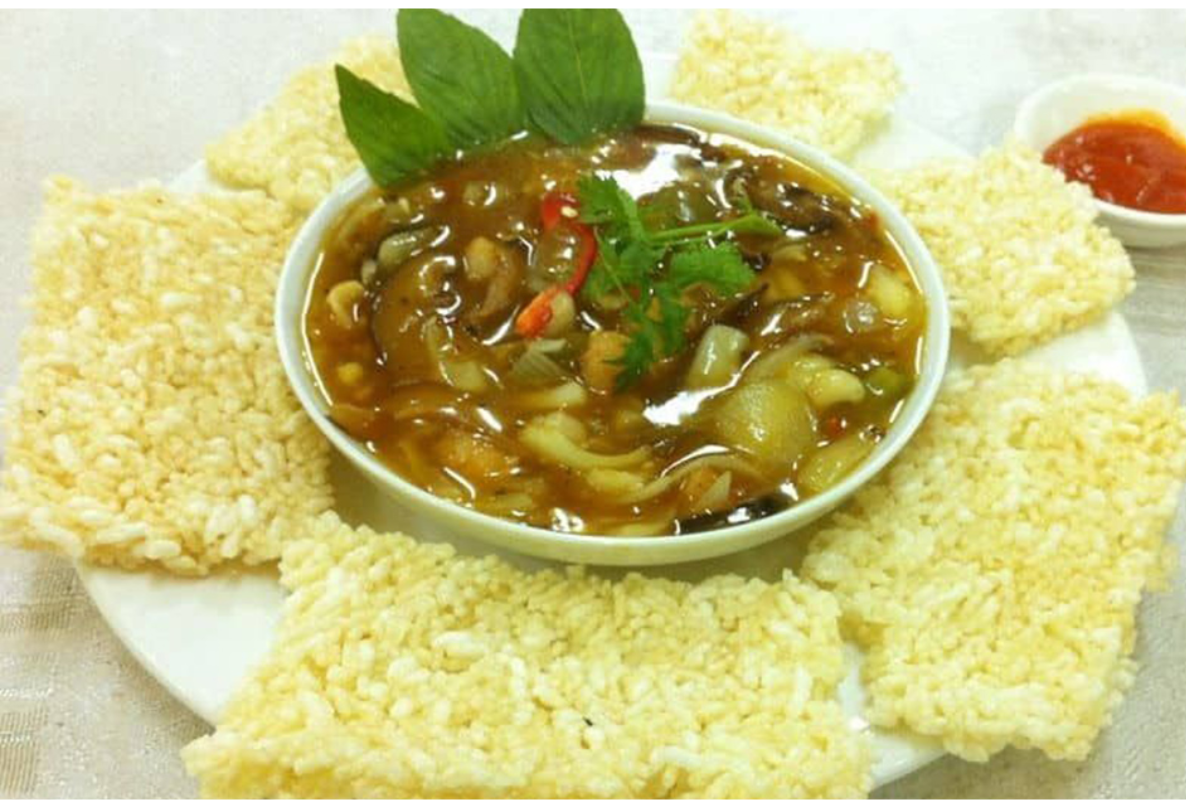
Goat Meat with Crispy Rice: (Dê Tái Chanh & Cơm Cháy) This is Ninh Binh’s most famous dish. The goat meat is exceptionally tender, often prepared "rare" in lime juice or grilled, and served with a plate of crispy, scorched rice crackers. It's a delightful combination of textures and flavors. Head to Hoang Giang Restaurant near the Trang An boat dock or Duc De Restaurant for an authentic taste.
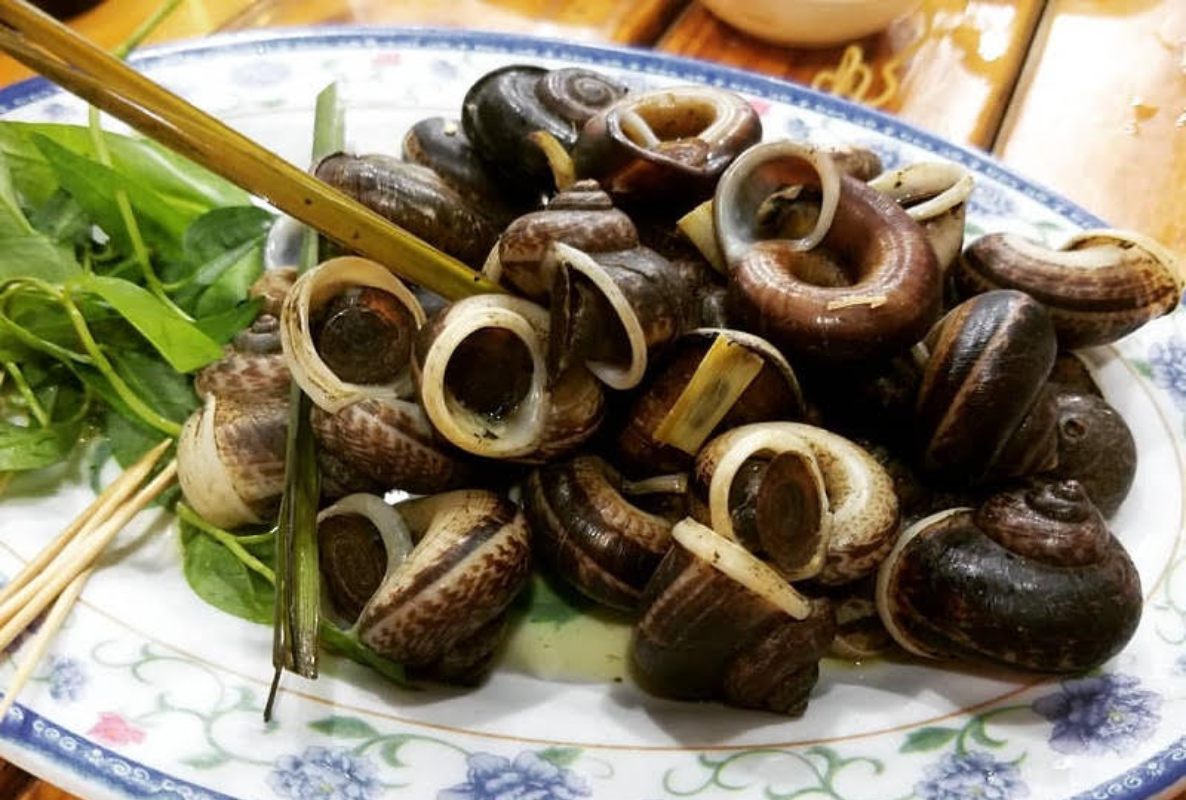
Mountain Snails (Ốc Núi): A rare delicacy available mainly from April to August, these snails are found in the limestone mountains and are said to be medicinal. They are often steamed with lemongrass or stir-fried in a spicy sauce. The chewy, flavorful meat is a true taste of the region.
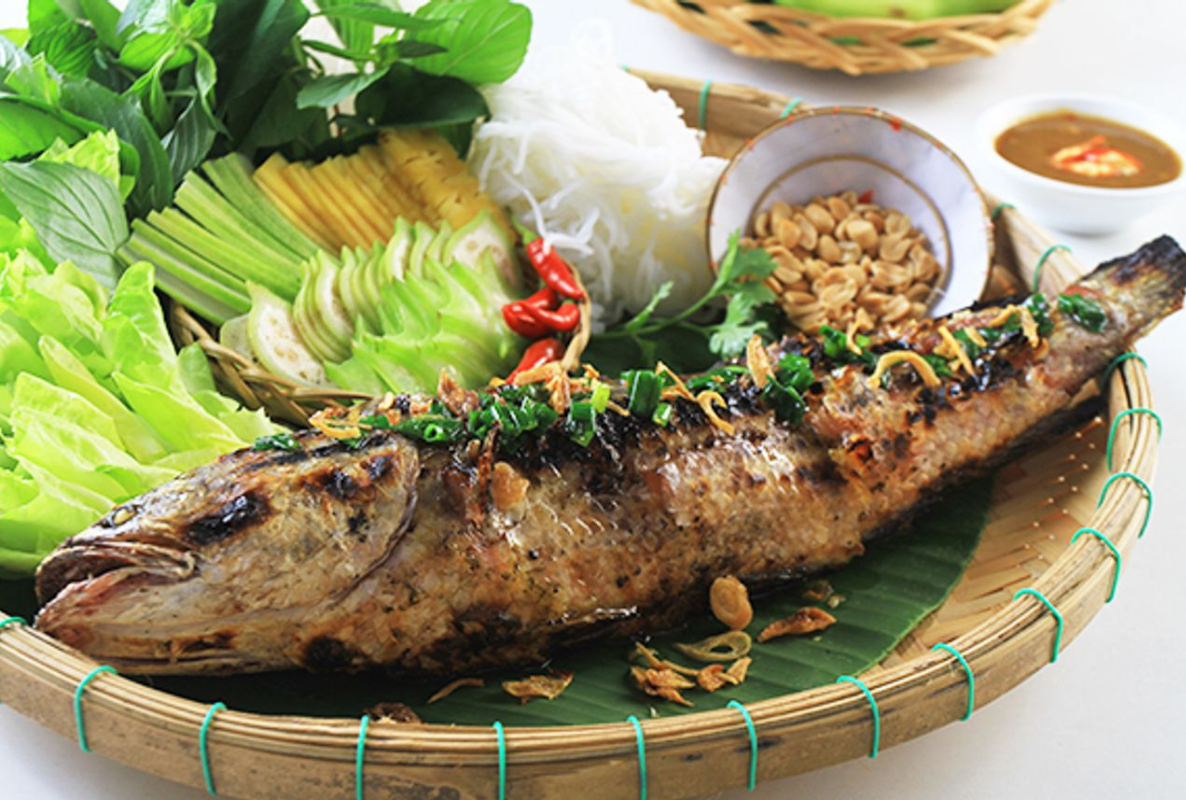
Grilled River Fish (Cá Nướng): The freshwater fish from the local rivers is marinated with spices, wrapped in banana leaves, and grilled over charcoal. This infuses the fish with a smoky, aromatic flavor that is simply delicious.
💡 Pro Tip: Don't eat inside the main tourist area of the pagoda if you're looking for an authentic meal. The best food is found in the local restaurants in and around Ninh Binh city and the Trang An area, where you’ll dine alongside locals.
🎟️ A Guide to Tickets and Fees
Visiting Bai Dinh is very accessible, as there is no main entrance fee to enter the complex itself. However, there are separate costs for transportation within the grounds and for accessing specific attractions.
Mandatory & Optional Costs:
Electric Car: A small fee of around 30,000 VND per person is required for a one-way trip. This is essential for traveling between the entrance and the main temple areas.
Bao Thap Stupa: There is an additional entrance fee of approximately 50,000 VND per person to take the elevator to the top for panoramic views.
Parking Fee: Approximately 15,000 VND for a scooter or car.
While you can purchase tickets on-site, we recommend booking a comprehensive tour package online through laimi.com. This often includes transportation from Hanoi or Ninh Binh, all necessary fees, and a guide, which simplifies your visit and ensures you don't miss a thing.
💡 Pro Tip: Arrive with enough cash to cover the electric car, stupa fee, and any food or souvenir purchases. While a tour can be all-inclusive, having local currency on hand is always a good idea.
👨👩👧 Who Will Love This Spiritual Journey?
Bai Dinh Pagoda is a destination that resonates deeply with culture and history enthusiasts, spiritual seekers, and photographers. Anyone interested in architecture, religion, or simply witnessing a place of immense scale and beauty will be captivated. The serene atmosphere makes it perfect for couples and solo travelers seeking a reflective experience.
The complex is generally accessible, and the electric cars make it manageable for families with children and older visitors. However, be prepared for a significant amount of walking and stair-climbing, especially if you plan to visit the ancient pagoda. Thrill-seekers might find the pace too slow, as the experience is centered on quiet contemplation rather than high-energy activities.
🎒 Essential Tips for Your Visit
To ensure your trip to Bai Dinh Pagoda is respectful and enjoyable, keep these important points in mind.
Dress Modestly: This is a sacred place of worship. All visitors are required to wear respectful clothing that covers their shoulders and knees. Avoid shorts, tank tops, and short skirts.
Wear Comfortable Shoes: You will be doing a lot of walking and climbing stairs. Comfortable footwear is non-negotiable for exploring the vast grounds.
Use the Electric Car: Don't underestimate the size of the complex. The electric car service is not just a convenience; it's essential to save your energy and time for exploring the actual temples.
Stay Hydrated: Bring a bottle of water with you. While there are places to buy drinks, it's always good to have your own on hand, especially on a hot day.
Be Respectful: Inside the worship halls, maintain a quiet and respectful demeanor. Avoid using flash photography, and do not touch the statues or sacred relics.
💡 Pro Tip: Remember that you are a guest in a deeply spiritual place. Observe local customs, be mindful of those who have come to pray, and you will be rewarded with a much richer and more meaningful experience.
🏁 Is a Visit to Bai Dinh Pagoda Worth It?
Absolutely. While the immense size can be daunting, any sense of being overwhelmed is quickly replaced by awe and wonder. The peaceful atmosphere, the intricate architecture, and the deep sense of history make Bai Dinh a truly memorable destination. It masterfully blends ancient tradition with modern ambition, creating an experience that feels both grand and deeply personal. What are you waiting for? To learn more about the tour routes and ticket prices, visit laimi.com for all the helpful information you need to plan your adventure.